Filtered by tag: website security × Clear

Vulnerability & Patch Roundup — September 2026
Matched: WordPress
Sucuri's September 2026 vulnerability and patch roundup highlights critical security updates for the WordPress ecosystem. The post warns that most breaches stem from automated attacks exploiting known, previously disclosed vulnerabilities. Site owners are urged to apply available patches promptly, as a single unpatched flaw can cause downtime, reputational damage, or costly remediation.
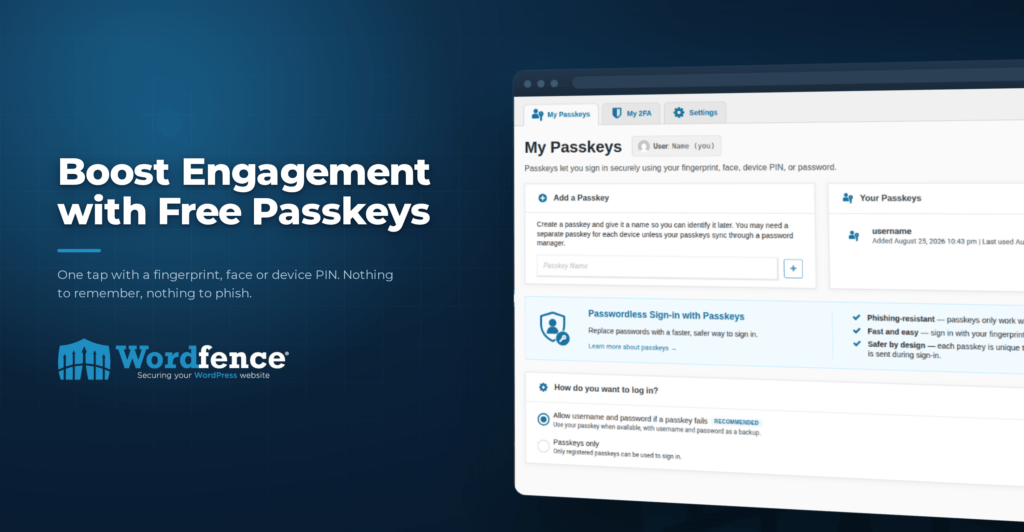
Boost Engagement with Free Passkeys by Wordfence
Matched: WordPress
Wordfence 9 introduces free passkeys for WordPress and WooCommerce sites, allowing users to sign in with a single click using fingerprint, facial recognition, or a PIN instead of a password. Available in both free and paid versions, passkeys reduce login friction and improve security by eliminating passwords that could be phished. Admins can make passkeys optional or required per user role, and users can register multiple passkeys across devices.

Vulnerability & Patch Roundup — August 2026
Matched: WordPress
Security researchers have compiled August 2026's key vulnerability patches for the WordPress ecosystem. Most breaches stem from automated attacks exploiting previously disclosed, known vulnerabilities. Unpatched flaws can take sites offline, damage reputations, or require costly remediation. The monthly roundup aims to help site owners maintain their security posture by staying current on critical updates.

WordPress Plugin Flaw Exposes 40,000 Sites to Admin Takeover
Matched: WordPress
A critical vulnerability in the WordPress User Profile Builder plugin, used by over 40,000 sites, allowed unauthenticated attackers to gain administrator-level access. The flaw enabled privilege escalation without requiring login credentials, potentially giving attackers full site control. A patch has been released and users are urged to update immediately.

How to Create a Secure WordPress Staging Site: Beginner’s Guide
Matched: WordPress
A WordPress staging site lets you test updates and changes before applying them to your live site, reducing the risk of broken features or layout issues going public. However, staging sites contain sensitive data like admin accounts, customer records, and API keys, so they also need proper security measures to avoid becoming a vulnerability.

Vulnerability & Patch Roundup — June 2026
Matched: WordPress
Sucuri's June 2026 vulnerability roundup highlights key security updates for the WordPress ecosystem. Most website compromises stem from automated attacks exploiting known, already-disclosed flaws. The post urges site owners to apply patches promptly, noting that Sucuri Firewall users are already protected via virtual patching.

Vulnerability & Patch Roundup — April 2026
Matched: WordPress
Sucuri's April 2026 roundup highlights notable WordPress ecosystem vulnerabilities and available patches. Automated attacks exploiting known software flaws remain a leading cause of website compromises. The report aims to inform website owners of potential threats, with listed vulnerabilities already virtually patched for existing Sucuri Firewall customers.

Vulnerability & Patch Roundup — March 2026
Matched: WordPress
Sucuri's March 2026 vulnerability roundup highlights security patches and disclosures across the WordPress ecosystem. Automated attacks exploiting known vulnerabilities remain a top cause of website compromises. The listed vulnerabilities have been virtually patched via the Sucuri Firewall, protecting existing clients. The roundup aims to help website owners stay informed about potential threats to their environments.